


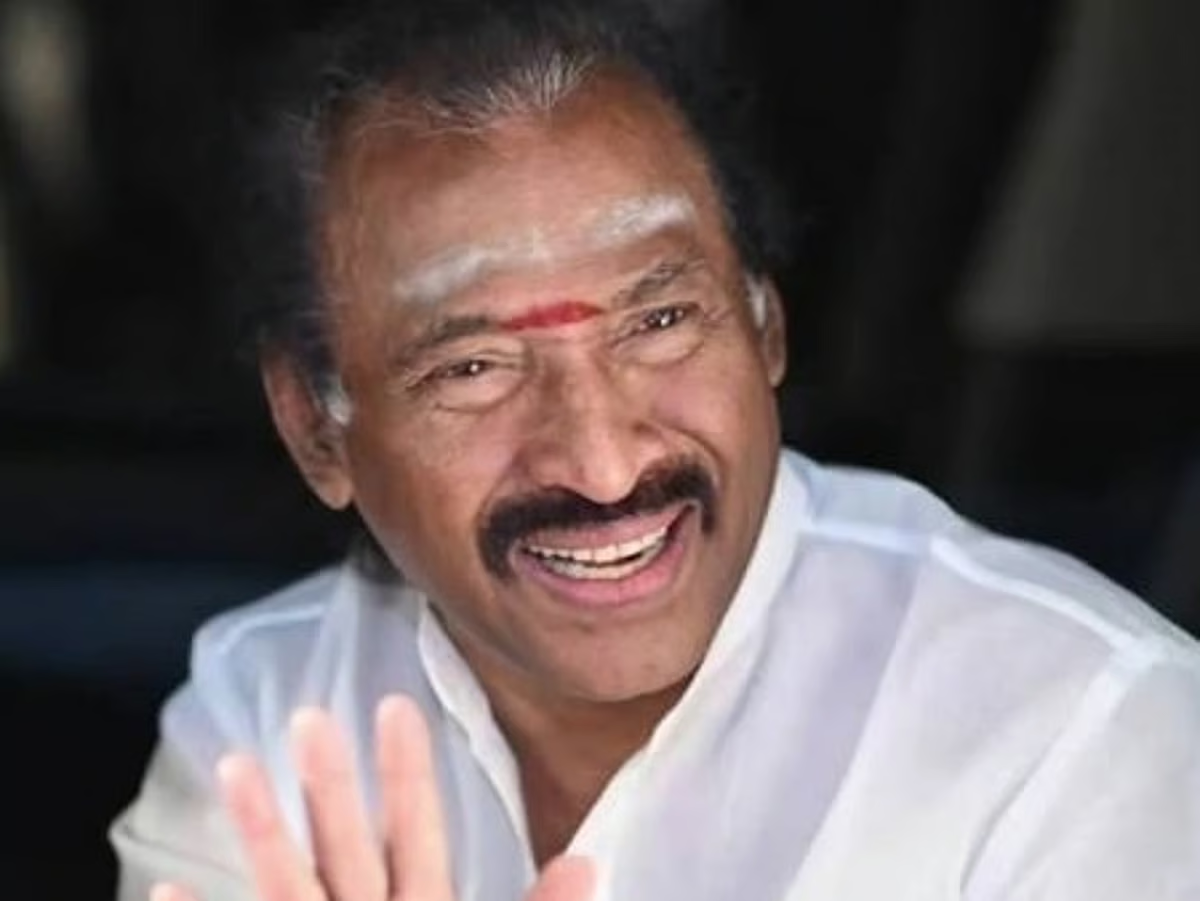
Deva Dies at 75: Tamil Cinema Mourns the Loss of a Legendary Music Composer
The Tamil film industry is mourning the loss of veteran music composer and singer Deva, who passed away in Chennai on Saturday, October 17, 2026, at the age of 75. Popularly known as “Thenisai Thendral,” the celebrated composer leaves behind a musical legacy spanning nearly four decades and more than 400 films across multiple South Indian languages.
Deva, whose full name was Devanesan Chokkalingam, became one of the most recognisable music directors in Tamil cinema, particularly during the 1990s. His compositions combined catchy melodies, energetic rhythms and the distinctive sounds of Chennai’s gaana music, helping bring a local musical tradition into mainstream cinema.
News of his death prompted tributes from leading personalities in the Tamil film industry, including superstar Rajinikanth and actor Kamal Haasan. Their association with Deva extended beyond professional collaborations, as his music became closely connected with several memorable films and performances.
Kamal Haasan remembered their association through Panchathanthiram, recalling memories of working with the composer. Other actors, musicians and public figures also expressed their condolences, highlighting Deva’s contribution to the evolution of Tamil film music.
His passing marks a significant loss for an industry in which his compositions helped define the sound of an important era.
Rajinikanth and Kamal Haasan Pay Tribute to Deva
Rajinikanth and Kamal Haasan are among the major stars whose cinematic journeys intersected with Deva’s music.
Deva’s association with Rajinikanth was particularly memorable. His compositions for films such as Annamalai and Baashha helped establish the musical atmosphere surrounding the superstar’s screen presence. The iconic title-card music associated with Rajinikanth became one of Deva’s most recognisable contributions to Tamil cinema.
For many fans, the composer’s music became inseparable from the anticipation and excitement surrounding Rajinikanth’s appearances on screen.
Kamal Haasan also shared a professional association with Deva, including their work together on Panchathanthiram. Following the composer’s passing, the actor recalled their collaboration and the memories that came flooding back.
The film, a comedy released in 2002, remains a notable part of their shared cinematic history.
The tributes reflect the breadth of Deva’s career. His work connected him with performers across different genres, generations and filmmaking styles, leaving behind a catalogue that continues to be associated with some of Tamil cinema’s most memorable moments.
Who Was Deva? A Look at His Musical Journey
Born Devanesan Chokkalingam on November 20, 1950, Deva built a distinctive identity in the South Indian film industry through his work as a composer, singer and lyricist.
His career developed during a period when Tamil film music was undergoing significant changes. Established composers had already created strong musical identities, and emerging artists needed to find new ways to connect with audiences.
Deva eventually carved out his own space by incorporating gaana music into mainstream film soundtracks. This style, rooted in Chennai’s popular street-music culture, featured accessible lyrics, distinctive rhythms and an earthy musical character.
His work helped demonstrate that local musical traditions could become an important part of commercial cinema without losing their individual identity.
Over the course of his career, Deva composed for more than 400 films across Tamil, Telugu, Kannada and Malayalam cinema. His versatility allowed him to work across different storytelling styles, from action dramas and romantic films to comedies and family entertainers.
His compositions became particularly popular during the 1990s, when several of his soundtracks achieved lasting recognition among audiences.
Deva’s Iconic Association With Rajinikanth’s Films
One of the defining aspects of Deva’s career was his association with Rajinikanth.
The composer worked on several films featuring the superstar, including Annamalai (1992) and Baashha (1995). Both films became important titles in Rajinikanth’s filmography, and their music contributed significantly to their identities.
The background score of Baashha is particularly remembered for its powerful title theme and the dramatic musical cues associated with the protagonist.
Deva’s work helped establish the familiar sound of Rajinikanth’s screen presence, creating a connection between music, character and audience anticipation.
The collaboration demonstrated how background music could become a recognisable part of a film star’s cinematic identity.
Beyond these films, Deva’s music for other projects helped establish him as a composer capable of balancing popular appeal with memorable musical arrangements.
His contribution to Rajinikanth’s films remains one of the most frequently recalled aspects of his career, particularly among fans who grew up watching Tamil cinema during the 1990s.
The Composer Who Brought Gaana Music Into Mainstream Cinema
Deva’s influence extended well beyond his work with major film stars. He played a significant role in popularising gaana music through commercial Tamil cinema.
Gaana is a distinctive musical tradition associated with Chennai, known for its rhythmic energy, colloquial expressions and connection to everyday urban life.
Before Deva’s work brought the style to wider audiences, it was often associated with local cultural settings rather than the mainstream film industry.
The composer recognised its potential as a musical language that could communicate humour, emotion and the experiences of ordinary people.
By incorporating gaana elements into film songs, he helped expand the range of sounds heard in Tamil cinema. His compositions connected with audiences through their directness, memorable hooks and energetic presentation.
Deva also wrote and sang several of his own gaana numbers, strengthening the connection between his identity as a composer and the musical style he helped popularise.
His work contributed to a broader understanding of what mainstream film music could include, demonstrating that regional influences could become central to a successful soundtrack.
For this contribution, the title “Thenisai Thendral,” often translated as “Breeze of Sweet Music,” became closely associated with him.
Popular Deva Songs and Memorable Soundtracks
Deva composed music for a large number of films, and several of his soundtracks remain associated with Tamil cinema’s popular music culture.
Among his best-known film albums are:
- Baashha: One of his most recognised collaborations with Rajinikanth, featuring memorable background music.
- Annamalai: Another significant Rajinikanth film for which Deva composed the soundtrack.
- Aasai: A popular Tamil film soundtrack that contributed to his standing during the 1990s.
- Kadhal Kottai: A romantic drama remembered for its music.
- Nerrukku Ner: A soundtrack from a film featuring Vijay and Suriya.
- Ninaithen Vandhai: A romantic musical featuring Vijay.
- Vaalee: A film starring Ajith Kumar, known for its songs and soundtrack.
- Kushi: A Vijay-starrer whose music became widely recognised among Tamil film audiences.
- Avvai Shanmugi: A Kamal Haasan film that demonstrated Deva’s work across a different cinematic style.
- Panchathanthiram: The 2002 comedy featuring Kamal Haasan, remembered as part of the actor’s association with the composer.
These films represent only a portion of Deva’s extensive catalogue. His career included many more soundtracks, background scores and songs across several languages.
His music reached audiences with different tastes, from fans of high-energy action films to viewers drawn to romantic dramas and comedies.
Deva’s Musical Legacy Across Four Decades
Deva’s career spanned a period of major transformation in the Indian film music industry.
He emerged as a prominent composer during the late 1980s and 1990s, working in an environment shaped by influential music directors and changing audience preferences.
Rather than attempting to replicate the sound of other composers, Deva developed an identity based on popular melodies and regional musical influences.
His work demonstrated the importance of musical diversity within commercial cinema. He showed that composers could incorporate local traditions while creating soundtracks capable of reaching large audiences.
His contributions also extended beyond the recording studio. As a singer and lyricist, he remained closely involved in different aspects of the music-making process.
The success and continued recognition of his songs illustrate how film music can become part of a region’s shared cultural memory.
Many listeners continue to associate particular compositions with memorable film scenes, actors and moments from their own lives.
That enduring connection is an important part of Deva’s legacy.
Deva’s Family and Musical Connections
Deva’s musical legacy also continued through his family.
His son, Srikanth Deva, followed in his father’s footsteps and established a career as a music composer in the Tamil film industry.
His brothers, Sabesh and Murali, were also associated with music and the film industry.
Their involvement reflects the collaborative nature of musical careers, in which family members and professional colleagues often contribute to one another’s development.
Deva’s journey into cinema was itself supported by musical connections and years of work to establish his own identity.
His career offers an example of how artistic influence can extend across generations, with musical knowledge and professional experience continuing through family members and collaborators.
Tributes Pour In From the Tamil Film Industry
Following the announcement of Deva’s passing, tributes emerged from across the Tamil entertainment industry.
Actors, musicians, lyricists and public figures remembered him for his contributions to cinema and the distinctive musical style he brought to film soundtracks.
Actor Vijay Sethupathi and lyricist Vairamuthu were among those reported to have expressed their condolences. Actress Khushbu Sundar also shared an emotional tribute, recalling a recent interaction with the composer.
The reactions highlighted not only Deva’s professional achievements but also the personal connections he maintained with colleagues.
His career brought him into contact with some of the most prominent names in South Indian cinema, and his music remained associated with films that continued to attract audiences long after their original release.
The breadth of the tributes reflects the position he held within the industry as a composer whose work reached beyond a single generation of filmgoers.

