


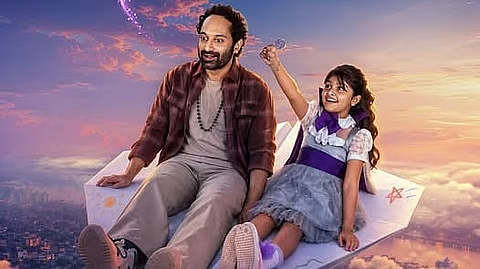
Don’t Trouble The Trouble Movie Review: Fahadh Faasil once again proves why he remains one of the most dependable performers in Indian cinema, bringing an effortless charm to a fantasy comedy that, despite having an intriguing premise, struggles to maintain its momentum. The film attempts to blend humour, fantasy and emotional drama, but its uneven writing prevents it from becoming the consistently entertaining experience it initially promises.
The biggest strength of Don’t Trouble The Trouble is undoubtedly Fahadh Faasil. The actor understands exactly how much performance a comic scene requires and rarely overplays his character. His expressions, timing and understated reactions provide several of the film’s most enjoyable moments.
However, the film itself seems unsure about the kind of entertainer it wants to be. At times, it leans heavily into fantasy; at others, it becomes a straightforward comedy or emotional drama. The transitions between these tones are not always smooth, and that eventually affects the overall viewing experience.
Don’t Trouble The Trouble Story
At its core, Don’t Trouble The Trouble revolves around a fantasy-driven situation that places its protagonist in increasingly unusual circumstances. What begins as an entertaining premise gradually expands into a series of comic situations, unexpected complications and emotional beats.
The idea has enough potential to support a fun fantasy comedy. Unfortunately, the screenplay does not consistently make the most of it.
The first half benefits from curiosity. The audience wants to discover where the story is heading and how the fantasy elements will influence the protagonist’s life. The comedy also gets a boost from Fahadh Faasil’s natural ability to make even simple reactions amusing.
As the narrative progresses, though, the film begins to lose focus.
Several sequences feel as though they have been added to move the story from one situation to another rather than organically developing the central conflict. This makes the second half comparatively less engaging.
Fahadh Faasil Is the Film’s Biggest Attraction
Fahadh Faasil carries much of Don’t Trouble The Trouble on his shoulders.
The actor has repeatedly demonstrated that he can switch between intense drama, dark humour and eccentric comedy without making his performances feel artificial. Here, he chooses a relatively restrained approach.
That restraint works particularly well.
Instead of forcing jokes, Fahadh often allows the situation itself to generate the humour. A facial expression, pause or reaction can sometimes land better than a deliberately written punchline.
His chemistry with the supporting cast also helps maintain the film’s energy.
Even when the screenplay becomes predictable, Fahadh keeps the protagonist interesting enough to hold attention.
A Fantasy Comedy With an Interesting Premise
Fantasy comedies depend heavily on how effectively their central fantasy concept is integrated into the story.
Don’t Trouble The Trouble has a concept that could have delivered plenty of creative possibilities. The film occasionally takes advantage of that potential, particularly when the fantasy element directly affects the protagonist’s everyday life.
These portions are among the film’s more entertaining stretches.
The problem is consistency.
The fantasy component sometimes feels like a storytelling device rather than an integral part of the world. Instead of constantly expanding the possibilities created by the premise, the screenplay occasionally returns to familiar comedy beats.
That makes the film feel less inventive than it could have been.
Comedy Works in Patches
There are genuinely funny moments in Don’t Trouble The Trouble, but the humour is inconsistent.
Some jokes land because of Fahadh’s delivery and the absurdity of the situation. Others feel stretched longer than necessary.
The film works best when it trusts its characters and circumstances rather than attempting to manufacture comedy.
The supporting actors contribute to several entertaining sequences, but the screenplay does not give every comic setup a satisfying payoff.
As a result, viewers may find themselves laughing during individual scenes while feeling that the overall comic rhythm is uneven.
The Film Loses Its Way in the Second Half
The major issue with Don’t Trouble The Trouble is its lack of narrative discipline.
The first half establishes an intriguing fantasy-comedy world and creates enough curiosity to keep viewers invested. But once the initial novelty begins to disappear, the screenplay struggles to find a strong direction.
The second half introduces complications, but not all of them feel equally compelling.
Some emotional moments also lack the impact the makers appear to be aiming for. The film wants audiences to care about its characters beyond the comedy, but the emotional writing is not always strong enough to create that connection.
This tonal imbalance is ultimately what prevents the movie from reaching its full potential.
Direction and Screenplay
The direction succeeds in creating an appealing atmosphere around the fantasy elements.
There is clearly an attempt to make the film visually engaging without allowing the fantasy component to completely overwhelm the characters.
However, the screenplay needed tighter editing and stronger progression.
A fantasy comedy can survive a simple plot if the characters are compelling and the situations continuously evolve. In Don’t Trouble The Trouble, the central idea is strong enough to attract attention, but the narrative does not always know how to keep developing it.
The result is an entertaining film in parts rather than a consistently satisfying one.
Supporting Cast
While Fahadh Faasil dominates the proceedings, the supporting cast plays an important role in maintaining the film’s comic energy.
The interactions between the protagonist and the other characters create several amusing situations. Some supporting performances provide much-needed energy when the screenplay slows down.
However, the supporting characters could have benefited from greater depth.
Several of them function primarily as devices for advancing the protagonist’s story or setting up comic situations. Giving them stronger individual motivations could have made the film’s emotional portions more effective.
Music and Technical Aspects
The technical department largely complements the film’s fantasy-comedy tone.
The visual treatment helps establish the slightly unusual world in which the protagonist finds himself. The background score also contributes to the comic and fantastical atmosphere.
However, the technical elements cannot completely compensate for the screenplay’s unevenness.
The film needed a sharper balance between its fantasy, comedy and emotional components.
What Works in Don’t Trouble The Trouble?
The strongest aspects of the film include:
- Fahadh Faasil’s performance
- His understated comic timing
- The fantasy premise
- Several genuinely entertaining sequences
- The chemistry between the lead and supporting performers
- A light-hearted approach to its central concept
These elements make the film worth considering, particularly for viewers who enjoy character-driven fantasy co

