


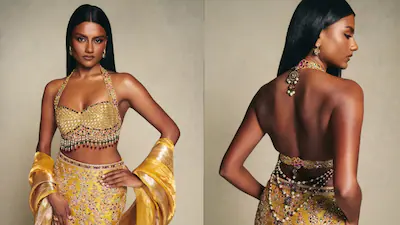
Simone Ashley Makes a Regal Fashion Statement in Gold at the Earthshot Prize 2026
British actor Simone Ashley brought a beautiful celebration of Indian craftsmanship to the 2026 Earthshot Prize Awards in Mumbai. Known internationally for her role as Kate Sharma in Netflix’s popular period drama Bridgerton, the actor made a memorable appearance in a custom gold ensemble by renowned Indian designer Manish Malhotra, created in collaboration with Swadesh.
The outfit was more than a glamorous red-carpet choice. It was designed as a tribute to Simone’s Tamil heritage, bringing together traditional South Indian weaving techniques, intricate embroidery and contemporary couture styling. The luminous gold creation showcased the richness of India’s textile traditions while giving them a modern fashion identity.
The sixth annual Earthshot Prize ceremony took place in Mumbai on November 17, 2026. The event brought together international personalities, environmental innovators and celebrities to recognise projects working towards a more sustainable future. Simone’s appearance added a distinctive Indian fashion moment to the global celebration.
Her ensemble stood out for its combination of Kanjeevaram silk, real gold zari, temple-inspired motifs and jewellery-like embellishments.
Simone Ashley’s Gold Ensemble Is a Tribute to Her Tamil Roots
Simone Ashley’s custom look celebrated her connection to her Tamil heritage through one of India’s most treasured textile traditions: Kanjeevaram weaving.
The ensemble featured a beautifully crafted skirt and a statement blouse made using a traditional Kanjeevaram saree. The fabric was created from pure mulberry silk and real gold zari tissue, giving the outfit its rich golden appearance and luxurious finish.
According to details shared about the creation, Swadesh master weaver Rajesh Sha spent approximately 700–750 hours weaving the textile. This extensive process highlights the time, skill and patience involved in producing a handwoven fabric of this kind.
Rather than relying only on surface embellishment, the outfit celebrated the beauty of the textile itself. Its traditional weaving, intricate borders and carefully placed decorative elements gave the ensemble a strong cultural identity.
The collaboration between Swadesh and Manish Malhotra brought together two important aspects of Indian fashion: the preservation of traditional craftsmanship and the creative possibilities of contemporary couture.
Kanjeevaram Silk and Real Gold Zari Add Traditional Grandeur
Kanjeevaram silk, also known as Kanchipuram silk, has a long-standing place in South Indian textile heritage. Recognised for its distinctive weaving, rich silk fabric and elaborate zari work, it is especially associated with traditional sarees worn during weddings, festivals and important celebrations.
In Simone’s outfit, this heritage textile was reimagined as a contemporary skirt-and-blouse ensemble.
The use of pure mulberry silk gave the fabric its characteristic richness, while real gold zari tissue added a luminous finish. Zari is a traditional weaving element in which metallic threads are incorporated into fabric to create decorative patterns and borders.
The result was a gold ensemble that celebrated the original textile without losing its modern couture character.
The estimated 700–750 hours spent weaving the fabric also drew attention to the human effort behind luxury Indian fashion. Every stage of traditional handloom production requires specialist knowledge, from preparing the threads to creating the final woven patterns.
Rekku Temple Motifs Reflect South Indian Architectural Heritage
One of the most distinctive features of Simone Ashley’s ensemble was its use of Rekku motifs.
These traditional motifs, described in the outfit’s design notes as temple-inspired patterns, were woven into the borders using real zari. Their visual language echoed architectural details associated with South Indian temples.
The border detailing gave the outfit a deeper cultural connection. Instead of using decorative patterns simply for visual effect, the design incorporated motifs that referenced a wider tradition of South Indian art and architecture.
This thoughtful approach helped connect the contemporary silhouette with the heritage of the region.
The gold borders also complemented the main fabric, creating a cohesive look in which the weaving and embroidery worked together rather than competing for attention.
Zardozi Embroidery Brings India’s Jewellery Traditions to the Outfit
The craftsmanship continued through the elaborate Zardozi embroidery featured across the ensemble.
Zardozi is a traditional form of decorative embroidery known for its rich metallic detailing. In Simone’s outfit, the floral patterns were inspired by the visual language of vintage Indian Kundan and Polki jewellery.
This jewellery-inspired approach gave the embroidery a distinctive character. The floral designs appeared almost like decorative pieces of jewellery translated into textile art.
The embellishments also incorporated colourful jewel-toned stones, including emerald, ruby, quartz, tourmaline, amethyst and sapphire.
These colours introduced subtle contrasts against the predominantly gold fabric. The result was an intricate combination of traditional embroidery, precious-looking stones and detailed handwork.
The design demonstrated how India’s jewellery-making traditions can inspire contemporary clothing, allowing craftsmanship from different artistic disciplines to come together in one creation.
The Embellished Blouse Is Another Highlight of Simone’s Look
While the skirt showcased the beauty of Kanjeevaram weaving, Simone’s blouse brought a more contemporary couture element to the ensemble.
The halter-neck blouse featured a sweetheart-style neckline and a fitted silhouette. Its heavily embellished surface complemented the skirt, while the decorative border and dangling tassels added movement.
The tassels incorporated pearls, emeralds, rubies and Kundan-inspired elements, creating a jewellery-like finish.
The back of the blouse was particularly distinctive. Layered strings of pearls and colourful stones came together with Kundan detailing to create an elaborate back-cowl design.
This detail gave the outfit an additional visual dimension. It also reflected Manish Malhotra’s familiar design approach of combining traditional Indian embellishment with dramatic contemporary silhouettes.
The blouse was not simply an accompanying piece; it was an important part of the overall craftsmanship story.
A Banarasi Tissue Drape Completes the Golden Look
Simone completed the ensemble with a handwoven Banarasi tissue drape in a matching shade of gold.
The fabric was carried around her arms, allowing it to fall gracefully on either side. Its addition brought another celebrated Indian textile tradition into the outfit.
Banarasi weaving is widely recognised for its rich silk fabrics and intricate decorative work. By combining a Kanjeevaram-inspired ensemble with a Banarasi tissue drape, the look brought together two distinct traditions of Indian textile craftsmanship.
The matching gold tones helped maintain a unified appearance, while the drape added softness and movement to the structured skirt-and-blouse silhouette.
The combination also demonstrated how traditional textiles can be styled in ways that feel relevant to international red-carpet fashion.
Simone Ashley Keeps Her Styling Elegant and Understated
With so much detail already present in the outfit, Simone’s accessories and beauty styling remained relatively restrained.
The actor wore delicate gold-toned earrings with colourful stone detailing, along with a statement ring. The jewellery complemented the embellishments in her clothing without distracting from the craftsmanship.
Her hair was styled straight and worn loose with a neat centre parting, creating a sleek finish.
For makeup, she opted for defined eyes, softly shaped brows, warm-toned eye makeup, a hint of blush and a muted nude lip colour. The overall beauty look balanced the elaborate outfit with a polished finish.
The styling was put together by Rebecca Corbin-Murray, while the hair and makeup were handled by Rio Sreedharan and Lake Sanu, respectively.
The final result brought together traditional Indian design, contemporary styling and a personal connection to heritage.
Swadesh and Manish Malhotra Bring Indian Craftsmanship to a Global Platform
The collaboration between Swadesh and Manish Malhotra placed Indian handloom traditions at the centre of an international fashion moment.
Swadesh focuses on showcasing and supporting India’s traditional crafts, artisans and handloom heritage. Manish Malhotra, meanwhile, is known for bringing elaborate Indian textiles and embroidery into contemporary couture.
Their collaboration on Simone’s outfit highlighted how traditional techniques can be preserved while being presented through modern silhouettes.
The extensive weaving time, use of pure mulberry silk, real gold zari, Zardozi embroidery and jewellery-inspired embellishments all contributed to the ensemble’s identity.
It also drew attention to the artisans whose specialised skills make such creations possible. Behind a red-carpet outfit is often a long process involving weaving, embroidery, design development and careful finishing.
Simone’s appearance offered an opportunity to recognise that work beyond the glamour of the event itself.
Why Simone Ashley’s Earthshot Prize Look Is a Memorable Fashion Moment
Celebrity fashion often attracts attention for its designers, silhouettes and styling. Simone Ashley’s gold ensemble stood out because it connected all three elements with a meaningful cultural reference.
The outfit celebrated her Tamil heritage while highlighting Kanjeevaram weaving, South Indian temple-inspired motifs and traditional Indian embroidery.
Its contemporary shape made the look suitable for a major international event, while the textile and decorative details kept its cultural references at the forefront.
The combination of Kanjeevaram silk and a Banarasi tissue drape was particularly notable. Both textiles have their own distinctive histories, and bringing them together created a look that celebrated the diversity of Indian craftsmanship.
The colourful stones and jewellery-inspired Zardozi work added another layer of artistry, demonstrating how traditional Indian techniques can be interpreted in new ways.
For Simone Ashley, the ensemble was a fashion statement with a personal connection. For Indian craftsmanship, it was another moment of visibility on an international stage.
Conclusion: Simone Ashley Celebrates Heritage Through Contemporary Indian Couture
Simone Ashley’s appearance at the Earthshot Prize 2026 was a striking celebration of Indian fashion and Tamil heritage. Her custom Swadesh x Manish Malhotra ensemble brought together pure mulberry silk, real gold zari, Rekku temple motifs, intricate Zardozi embroidery and a handwoven Banarasi tissue drape.
The estimated 700–750 hours spent weaving the Kanjeevaram textile made the creation particularly noteworthy, highlighting the dedication and expertise behind traditional Indian handloom work.
By combining heritage craftsmanship with a contemporary silhouette, the outfit offered a memorable example of how cultural traditions can find a place in modern global fashion.
Simone’s gold look was not just about red-carpet glamour. It was also a celebration of the artisans, techniques and artistic traditions that continue to shape India’s rich textile heritage.

