

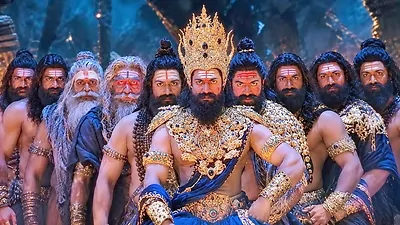
The upcoming cinematic adaptation of Ramayana has sparked conversations beyond its star cast, visuals and storytelling. An interesting discussion has emerged across social media, where some women have jokingly admitted that they initially went to see Lord Ram but ended up being fascinated by Ravana’s powerful screen presence.
The conversation has raised an interesting question: Why do certain audiences find a powerful, muscular and commanding male personality attractive, even when the character represents an antagonist?
The contrast between Ram and Ravana offers an interesting way to explore the psychology of attraction. While Ram represents grace, discipline, calmness and idealistic values, Ravana’s cinematic presentation emphasises a muscular appearance, deep voice, intense expressions and commanding personality.
However, being physically attracted to a fictional character does not necessarily mean approving of his actions or moral values.
Psychologists explain that physical attraction, emotional connection and moral admiration are different psychological experiences. The ongoing social media conversation also highlights how popular cinema influences society’s understanding of masculinity and attractiveness.
Ram vs Ravana: Two Different Representations of Masculinity
The visual presentation of Ram and Ravana creates a striking contrast between two different masculine personalities.
Ram is generally portrayed through a calm expression, graceful appearance, dignified clothing and controlled body language. His character represents discipline, compassion, responsibility and righteousness.
Ravana, on the other hand, is frequently presented with a heavy beard, muscular physique, intense eyes, powerful voice and commanding screen presence.
These contrasting visual elements create two different impressions for viewers.
Ram’s personality is associated with emotional control, moral responsibility and inner strength. Ravana’s cinematic appearance emphasises physical power, confidence and authority.
The difference is important because viewers may respond to different aspects of a character independently.
Someone may appreciate Ravana’s visual presentation without supporting his decisions, just as someone may admire Ram’s values without necessarily being attracted to his cinematic appearance.
The distinction between attraction and admiration is central to understanding this discussion.
Why Are Some Women Attracted to Ravana’s Powerful Personality?
According to psychologist Dr Satyakant Trivedi, physical attraction and respect for someone’s moral character are not the same psychological process.
People can feel drawn towards someone’s appearance, voice, gestures or confidence even when they do not agree with that person’s behaviour or beliefs.
In cinema, these characteristics are often carefully designed to create a memorable impression.
A deep voice, strong body language, intense expressions and confident dialogue delivery can make a fictional character appear commanding.
However, it would be incorrect to assume that all women prefer aggressive, dominant or muscular men. Attraction is highly individual and influenced by personal experiences, cultural backgrounds, emotional needs and preferences.
The social media reactions surrounding Ravana should therefore be understood as a conversation about cinematic presentation rather than proof of a universal change in women’s preferences.
The Psychology of Alpha Male Masculinity
The term ‘alpha male’ is frequently used in popular culture to describe a man perceived as confident, assertive, physically strong and socially influential.
In films and online conversations, this image is often associated with a muscular body, a deep voice, a well-groomed beard and commanding body language.
These characteristics can create an impression of confidence and authority.
However, confidence and dominance are not interchangeable. A person can be confident without controlling others, and physical strength does not automatically indicate emotional maturity or good character.
The popular idea of an alpha male also tends to simplify human personality. Real-life relationships are much more complex than a collection of physical features or dominance-related behaviours.
A healthy understanding of masculinity includes responsibility, empathy, emotional awareness, mutual respect and the ability to communicate effectively.
Why Do Muscular Bodies and Deep Voices Attract Attention?
Physical appearance plays an important role in first impressions.
Features such as broad shoulders, facial structure, muscularity and voice can influence how audiences perceive a person.
In cinematic storytelling, these elements are often used to communicate strength, confidence or authority before a character even speaks.
A deep voice, for example, can make dialogue delivery sound more dramatic. Similarly, controlled movements and confident posture can give a character a commanding presence.
However, these are impressions rather than reliable measures of someone’s actual personality.
A muscular physique does not establish that someone is dependable, protective or emotionally strong. Likewise, a softer appearance does not indicate weakness.
The attraction towards Ravana’s cinematic presentation demonstrates how visual storytelling can influence audience perception.
Why Are Men Becoming More Conscious About Their Physical Appearance?
The discussion is not limited to women’s attraction towards male characters. It also raises questions about how men perceive their own appearance.
Gym culture, bodybuilding, beard grooming and personal styling have become increasingly visible in popular culture.
For many people, these activities are connected with fitness, personal confidence and self-expression. They can also reflect a desire to feel socially accepted and appreciated.
Psychology often connects this behaviour with the concept of social validation.
Social validation refers to the importance people attach to feedback and acceptance from others. Compliments, positive reactions and social recognition can influence how individuals view themselves.
Social media has made this process more visible. Photographs, videos, comments, likes and comparisons have created an environment where physical appearance frequently receives public attention.
As a result, some men may feel encouraged to develop a particular appearance because they believe it will make them more attractive to potential partners or improve their social image.
However, these motivations differ from person to person and should not be generalised to all men.
Social Media Has Changed the Conversation Around Masculinity
Social media has played a major role in turning the Ram-Ravana discussion into an entertaining cultural conversation.
Short videos, edits, photographs and humorous comments allow audiences to express their reactions to fictional characters in creative ways.
The statement about going to see Ram but falling for Ravana is an example of how a cinematic impression can become a popular online discussion.
It also reflects the growing influence of visual culture on perceptions of attractiveness.
Earlier, audiences primarily discussed a character’s acting, dialogues and storyline. Today, conversations also focus on physical appearance, styling, body language and screen presence.
A character’s popularity can therefore extend beyond the traditional boundaries of good versus evil.
Nevertheless, social media trends should not automatically be treated as scientific evidence of changing relationship preferences.
A viral joke or a collection of online reactions cannot represent the views of an entire gender or society.
Psychologists Explain the Difference Between Confidence and Dominance
One of the most important aspects of the ongoing discussion is the difference between confidence and dominance.
Confidence generally involves believing in one’s abilities while remaining comfortable with other people’s individuality and opinions.
Dominance, meanwhile, can involve attempts to control situations or influence others through authority.
A commanding screen presence may look attractive in a fictional setting because filmmakers use lighting, music, costumes, dialogue and camera angles to make a character appear powerful.
Real-life relationships require a different set of qualities.
According to psychologist Dr Vidhi M. Pilania, the online reactions to the film should be viewed as an expression of popular culture and changing perceptions of masculine imagery, rather than evidence of a major shift in women’s preferences.
She also emphasises that the cultural and moral meanings of Ram and Ravana remain distinct. Appreciating the cinematic presentation of one character does not mean rejecting the values represented by the other.
Similarly, being muscular does not automatically make someone superior, and having a gentle personality does not make someone weak.
Does Physical Attraction Mean Moral Approval?
This is perhaps the most important question arising from the Ram-Ravana conversation.
The answer is no.
Physical attraction and moral approval are separate experiences. A viewer can appreciate the appearance, acting or dialogue delivery of a fictional villain without supporting the character’s actions.
Cinema frequently creates memorable antagonists through strong performances, distinctive styling and powerful storytelling.
Some villains become popular because of their complexity, confidence or visual impact. Their popularity does not mean audiences agree with their behaviour.
The same distinction applies to Ravana.
In the traditional Ramayana narrative, Ravana is a complex and powerful figure, known for his knowledge and abilities, but his actions also carry significant moral consequences.
His cinematic portrayal can attract attention without changing the ethical context of the character.
Understanding this distinction helps audiences discuss fictional personalities without confusing screen appeal with real-life values.
What Makes a Man Truly Attractive Beyond Physical Appearance?
The growing conversation around masculine attractiveness also invites a broader question: What makes someone genuinely attractive beyond physical features?
Physical appearance may influence the first impression, but lasting respect and meaningful connections involve several other qualities.
Some important characteristics include:
- Confidence: Being comfortable with oneself without needing to dominate others.
- Emotional maturity: Understanding emotions and responding thoughtfully to difficult situations.
- Respect: Treating other people with dignity and recognising their boundaries.
- Reliability: Keeping promises and taking responsibility for one’s actions.
- Empathy: Understanding and considering the feelings of others.
- Self-control: Managing disagreements without relying on intimidation or aggression.
- Communication: Expressing thoughts clearly while listening to different perspectives.
Th

