


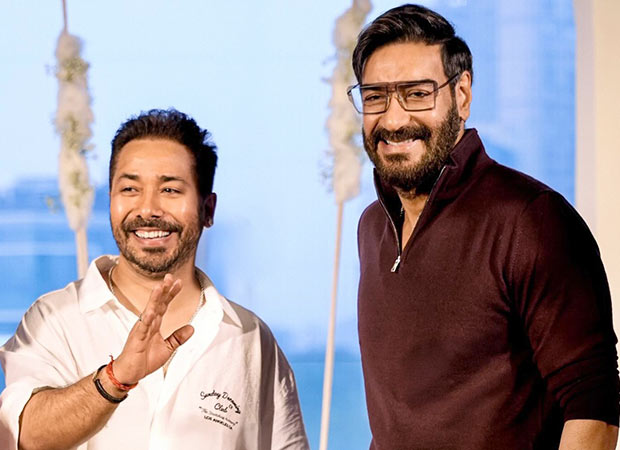
Drishyam 3 Exclusive Interview: Filmmaker Abhishek Pathak has opened up about the creative challenges behind Drishyam: The Conclusion, starring Ajay Devgn, Tabu and Jaideep Ahlawat. The director’s approach to the Hindi thriller highlights one of the most important principles of suspense filmmaking: a carefully constructed buildup can lose its impact if the climax does not deliver.
Released in theatres on October 2, 2026, Drishyam: The Conclusion brings the Hindi-language story of Vijay Salgaonkar and his family to a major turning point. For Pathak, the challenge was not simply to continue a successful franchise but to create a conclusion that could surprise audiences familiar with its characters, storytelling techniques and intricate twists.
In an interview with Onmanorama, Pathak discussed the screenplay process, his decision to take the Hindi instalment in a different direction from the Malayalam version, and the importance of finding the right ending before developing the rest of the story.
Abhishek Pathak on Why the Climax Is Crucial to Drishyam 3
The Drishyam franchise has built its reputation on suspense, unexpected developments and the audience’s constant attempt to stay one step ahead of the characters. For the third instalment, Pathak faced the challenge of meeting those expectations without simply repeating what viewers had already experienced.
The climax was central to that process. In a suspense thriller, the ending must bring together the clues, character decisions and narrative developments introduced throughout the film. If the resolution fails to justify the buildup, even an otherwise engaging story can lose its impact.
Pathak’s approach was to establish the destination before mapping out the journey. By determining how the story should conclude, the filmmakers could develop the twists and dramatic moments around a clear narrative objective.
This approach was particularly important for Drishyam 3, as audiences already had strong expectations about Vijay Salgaonkar and his ability to outthink the people investigating his family’s secrets.
Rather than relying solely on familiar franchise elements, the director wanted to deliver a fresh experience while retaining the tension and emotional stakes that had made the earlier films popular.
Why Abhishek Pathak Worked on the Ending First
One of the most revealing aspects of Pathak’s creative process was his decision to solve the film’s biggest storytelling puzzle before writing the screenplay in full.
In his conversation with Onmanorama, the director explained that the team needed to establish the ending, including the major twist and the possibility of genuinely surprising audiences, before moving forward with the script.
This decision shaped the development of the entire film. Once the ending was established, the team could determine which clues to introduce, how the characters should behave and how the suspense should build towards the final revelation.
The process was far from straightforward. Pathak said the screenplay went through more than 100 drafts, with different versions exploring alternative approaches to the story.
The number of drafts demonstrates the level of revision involved in constructing a thriller of this scale. Each version offered an opportunity to reconsider the pacing, the information revealed to the audience and the way the story’s central mystery unfolded.
For a franchise where small details can influence the audience’s interpretation of events, such revisions are particularly important.
More Than 100 Drafts: Building the Perfect Suspense Thriller
Writing a successful thriller requires more than introducing unexpected twists. The story must establish enough information for viewers to follow the mystery while withholding the answers that would reveal its resolution too early.
Pathak’s extensive screenplay process reflects the difficulty of balancing these competing demands.
A twist needs to surprise the audience, but it must also make sense when viewers reconsider the story afterwards. Similarly, the buildup must provide meaningful clues without making the final revelation too predictable.
The director also explored darker versions of the story before settling on the version that reached theatres. This suggests that the creative process involved evaluating not only what could shock audiences but also what best suited the film’s tone and characters.
Pathak has described Drishyam as a franchise driven by its edgy thriller elements and uncertainty about what will happen next. Maintaining that unpredictability was a key consideration while developing the third instalment.
The result was intended to offer a distinct narrative experience rather than merely reproduce the structure of its predecessors.
Ajay Devgn Returns as Vijay Salgaonkar
Ajay Devgn reprises his role as Vijay Salgaonkar, the ordinary family man whose extraordinary ability to anticipate investigative moves has become the defining feature of the Hindi franchise.
Vijay’s appeal lies in the contrast between his everyday life and his calculated responses to extraordinary circumstances. He is not presented as a conventional action hero. Instead, his greatest strength is his ability to think ahead, understand how others might interpret events and use seemingly insignificant details to influence the course of an investigation.
For the audience, this creates a distinctive viewing experience. Every conversation, object and decision can become relevant to the larger mystery.
Devgn’s restrained performance has been an important part of the character’s identity. Rather than explaining every thought through dialogue, Vijay often communicates through silence, expressions and carefully measured responses.
The third film builds on that established identity while moving the story towards its intended conclusion.
Tabu, Jaideep Ahlawat and the Film’s Ensemble Cast
Alongside Devgn, Drishyam: The Conclusion features Tabu, Shriya Saran, Ishita Dutta and Mrunal Jadhav, who return to the Hindi franchise. Jaideep Ahlawat and Prakash Raj are among the prominent additions to the cast, with Rajat Kapoor and Kamlesh Sawant also appearing.
Tabu’s character, Meera Deshmukh, has been central to the conflict surrounding Vijay and his family. Her pursuit of answers provides an important counterpoint to Vijay’s attempts to protect those closest to him.
The presence of Jaideep Ahlawat and Prakash Raj adds further dimensions to the film’s dramatic world. Their characters contribute to the new chapter’s narrative and help distinguish it from the earlier instalments.
For a suspense-driven film, the interactions between characters are particularly important. The tension depends not only on what each person knows but also on what they suspect, conceal or misunderstand.
The ensemble therefore plays a significant role in sustaining the uncertainty on which the franchise depends.
Why the Hindi Drishyam 3 Takes a Different Direction
The Hindi and Malayalam versions of Drishyam share the same broad franchise roots, but the third instalments follow different narrative paths.
The original Malayalam films starred Mohanlal as Georgekutty, while the Hindi adaptations feature Ajay Devgn as Vijay Salgaonkar. Jeethu Joseph directed the original Malayalam films, and Abhishek Pathak directed the second and third Hindi instalments.
According to Pathak’s interview with Onmanorama, the intention was not to recreate the Malayalam third film scene by scene. Instead, the Hindi team wanted to preserve the spirit of the franchise while developing its own story.
This distinction was important because the two versions had reached different points in their storytelling. Repeating the same developments would have limited the creative possibilities for the Hindi film and reduced the element of surprise for viewers familiar with both versions.
Pathak’s decision allowed the Hindi instalment to pursue its own resolution while remaining connected to the central themes of family, secrets and the consequences of past decisions.
The different approaches also demonstrate how adaptations can evolve independently, even when they originate from the same story.
Is Drishyam: The Conclusion the Final Film?
The title Drishyam: The Conclusion signals the importance of the third instalment in the Hindi franchise. Pathak has indicated that he viewed the film as a natural endpoint for Vijay Salgaonkar’s story.
In interviews, the filmmaker has also expressed caution about extending a successful franchise simply because audiences want another instalment.
For Pathak, a further chapter would need a genuinely compelling story rather than relying on the popularity of the existing characters. He has left room for the possibility that a strong idea could change the situation, but the current film was developed with the intention of bringing the Hindi storyline to a conclusion.
This approach is consistent with his emphasis on finding a satisfying ending. A franchise finale carries the additional responsibility of resolving long-running narrative questions while giving the characters an appropriate destination.
Whether audiences agree on every creative decision, the film’s ending remains central to how they evaluate the journey as a whole.
What Makes Drishyam Different From Other Crime Thrillers?
The appeal of Drishyam extends beyond its mystery. At its heart, the franchise examines the lengths to which a person might go to protect family and the moral complications that follow.
Vijay’s intelligence makes him an engaging central character, but his choices also create difficult questions about truth, responsibility and justice.
The audience is encouraged to examine events from several perspectives. What appears convincing from one character’s point of view may look entirely different to another, and new information can alter the meaning of earlier scenes.
This shifting perspective is one of the franchise’s defining storytelling techniques. It allows the films to combine the mechanics of a crime investigation with emotional questions about loyalty and family.
For the third instalment, Pathak needed to preserve that balance while offering something audiences had not already seen.
Conclusion
Abhishek Pathak’s approach to Drishyam: The Conclusion highlights the importance of planning, revision and narrative precision in suspense filmmaking. By focusing on the ending before developing the full screenplay and revisiting the story across more than 100 drafts, the director sought to create a thriller that could surprise audiences without losing the franchise’s emotional core.
With Ajay Devgn returning as Vijay Salgaonkar and the Hindi story reaching its intended conclusion, the film represents a significant chapter in one of Indian cinema’s best-known thriller franchises.
Ultimately, a suspense film is judged not just by the questions it raises but by how convincingly it answers them. For Drishyam, where the smallest details can matter, the climax is an essential part of the storytelling equation.

